As an Amazon Associate, we earn from qualifying purchases. Some links on this site are affiliate links at no extra cost to you. Our recommendations are based on thorough research and editorial judgment.


Vertical vs. Horizontal Stacks: Aesthetics and Access

When choosing between vertical and horizontal stacks, it’s like picking your favorite ice cream flavor! Vertical stacks—think classic vanilla!—offer clarity and easy navigation, making your content pop right off the page. Horizontal stacks, like a jazzy swirl of colors, promote sleek, modern designs that maximize space and visual appeal. Just remember, each style has pros and cons! Curious about how to blend both for your next project? There’s so much more to explore!
Key Takeaways
- Vertical stacks promote clarity and readability, aligning with natural reading patterns, while horizontal stacks can create confusion if not designed carefully.
- Horizontal stacks provide a modern, stylish arrangement that enhances visual appeal, ideal for clean and minimalist designs.
- Accessibility can be optimized in vertical stacks due to reduced cognitive load, whereas horizontal stacks require clear navigation and ARIA attributes for usability.
- Aesthetic impact favors vertical stacks for their visual clarity, while horizontal stacks may introduce perceptual clutter if not thoughtfully organized.
- Technical challenges differ, with vertical stacks ensuring seamless integration, while horizontal stacks can face latency and complexity due to additional components.
Understanding Vertical Stacks: Structure and Use Cases

You may be interested


Have you ever stacked your favorite vintage comic books, creating a colorful tower of superhero stories? Vertical stacks flourish with a top-to-bottom design, where each book plays an essential part—like an avenging hero. Think LIFO, where the newest comic is at the top! They’re perfect for showcasing individual elements, but stack optimization strategies can get tricky when you want to access the ones below without rearranging the entire collection—a classic comic conundrum! Vertical stack alternatives may offer wider visibility, but with stacks, you enjoy clear, sequential access. User interfaces love these structures too—just peek at those vibrant vertical card stacks! If you’re diving into UI design, remember that a neat, organized stack can improve your workflow while keeping it trendy. Low-profile bookcases are particularly advantageous in small living spaces, as they maximize space efficiency without overwhelming room aesthetics.
The Appeal of Horizontal Stacks: Design and Functionality
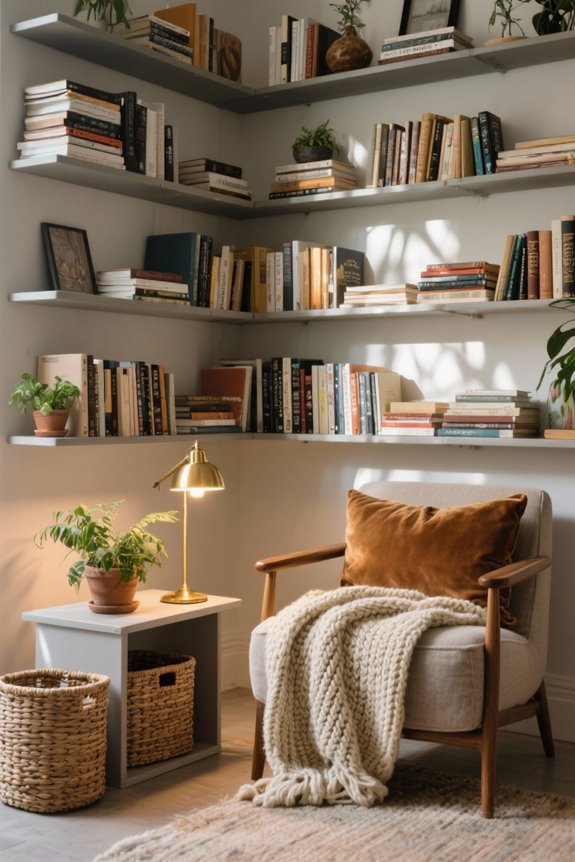
Although many might initially overlook the charm of horizontal stacks, they actually pack a stylish punch—think sleek, side-by-side arrangements that scream modernity. This layout dazzlingly showcases horizontal alignment benefits, emphasizing clean lines and symmetry that popular minimalist designs crave. It’s not just looks; it creates a sense of openness, ideal for snug spaces! Whether you paint those walls a trendy deep navy or pop in ceramic tiles for some pizzazz, horizontal stacks can turn bland into grand! Picture a kitchen where every utensil harmonizes in perfect, eye-catching rows. Isn’t that neat? From digital interfaces to real-life interiors, horizontal layouts are your budget-friendly, visually intriguing companion. Who wouldn’t want that pizzazz? It’s modern design elements at their finest! Corner bookshelves, for instance, maximize space utilization efficiently, making them a popular choice for small spaces.
Accessibility Considerations for Stack Layouts

Finding your way through the world of stack layouts can sometimes feel like a treasure hunt—where the “X” marks not just the spot but the secrets to accessibility. For users relying on screen readers, vertical stacks sync with natural reading patterns, enriching accessible navigation! Imagine, stacks that reduce cognitive load and make interactions smoother! Horizontal stacks, though stylish, can trip users if navigation isn’t crystal clear, leading to confusion like trying to find the last cookie in a jar! Adding ARIA attributes and ensuring proper focus visibility turns potential chaos into clarity. Every detail matters—appropriate color contrast and consistent layouts create an inviting space, making sure all users feel welcomed and engaged. Adjustable wall sconces with features like swing arms or rotating heads can enhance lighting design and usability in spaces where stack layouts are used. Accessible stacks—who knew they could be this much fun?
Aesthetic Impact: How Stacks Influence Visual Perception

When users encounter different stack layouts, the aesthetic impact on visual perception can be nothing short of mesmerizing! Horizontal stacks, with controls side-by-side, can bump up visual crowding effects, leading to distracting perceptual clutter. Ever tried distinguishing between a dozen donuts on a crowded table? Exactly! In contrast, vertical stacks arrange elements in a pleasing column, enhancing visual clarity and readability—like a neat bookshelf versus a messy desk. This layout reduces crowding and helps users follow information securely, just like binge-watching your favorite series without confusing subplots. Ultimately, the arrangement matters; choose wisely to boost appeal and keep your space stylish! Why settle for chaos when you can have clarity? Let’s stack it up right! A well-chosen stack layout, much like decorative throw pillows, can enhance both comfort and visual appeal, ensuring a harmonious balance in any space.
Technical Challenges and Performance of Stack Implementations

Maneuvering the labyrinth of technical challenges in stack implementations can feel like trying to assemble IKEA furniture without instructions—confusing and potentially disastrous! Vertical stacks simplify integration, offering seamless ownership and streamlined communication. However, watch out: horizontal stacks struggle with integration bottlenecks that can turn into colossal headaches—like trying to fit a sofa through a narrow door! With more components comes more coordination, leading to performance trade-offs like increased latency and complex infrastructure. While vertical scaling improves speed, it hits hardware limits rapidly. Conversely, horizontal scaling can distribute workloads across machines—great news for uptime—but managing tangled dependencies feels akin to deciphering a Rubik’s Cube! Each choice boasts its quirks, but understanding these nuances can sharpen your tech savvy! Book nooks, like the Rolife DIY Book Nook Kit, offer a unique crafting experience that enthusiasts can enjoy while exploring intricate designs.
Frequently Asked Questions
How Do Stack Layouts Affect User Engagement Metrics?
How does layout influence engagement metrics? Stack performance greatly impacts user retention; horizontal layouts enhance quick feature visibility, while vertical stacks encourage deeper content interaction, ultimately shaping how users engage with applications over time.
What Industries Benefit Most From Horizontal vs. Vertical Stacks?
E-commerce platforms and content management systems benefit from horizontal stacks for expansive layouts, while vertical stacks support industries like healthcare and automotive. User interface design trends emphasize functionality, guiding ideal stack choices for efficiency and accessibility.
How Can Brands Maintain Consistency Across Stack Layouts?
Like a symphony’s rhythm, brands maintain harmony across stack layouts through established layout guidelines that echo brand identity. These principles guarantee that every logo, color, and message resonates uniformly, enhancing recognition and user experience.
Are There Cultural Preferences for Vertical or Horizontal Stacking?
Cultural preferences for vertical or horizontal stacking reflect deeper cultural perceptions and design traditions. Vertical cultures favor hierarchical arrangements, while horizontal cultures prefer egalitarian layouts, emphasizing equal access and fluid interaction among elements and individuals.
How Do Stack Layouts Influence Mobile Versus Desktop User Experiences?
Stack layouts considerably impact mobile ergonomics and desktop usability. Vertical stacks enhance accessibility and ease of navigation on mobile devices, while horizontal layouts optimize space and discoverability for users on larger desktop screens.


