As an Amazon Associate, we earn from qualifying purchases. Some links on this site are affiliate links at no extra cost to you. Our recommendations are based on thorough research and editorial judgment.


Houseplants That Thrive in Low‑Light Reading Corners

Houseplants breathe life into low-light reading corners! Think ZZ plants, Snake plants, and Peace Lilies—brightening your space effortlessly while filtering air! Snake plants (also known as mother-in-law’s tongue) thrive with minimal care, while Peace Lilies flaunt stunning blooms! Mix in Pothos for charm and character. Want to jazz up your ambiance and improve focus? Layer your plants, choose fancy planters, and create a mini jungle! Stick around, and explore more tips to create your perfect green retreat!
Key Takeaways
- ZZ Plant and Snake Plant are ideal low-maintenance choices for dimly lit reading corners.
- Peace Lilies add beauty with their blooms while thriving in low light.
- Chinese Evergreen’s lush, variegated leaves infuse a tropical vibe into your space.
- Pothos’ trailing vines elegantly enhance bookshelves and cozy corners.
- Incorporate rounded furniture features for safety alongside your plant display.
Best Low-Light Plants for Reading Corners
You may be interested


When it comes to creating the perfect reading corner, who wouldn’t want a space that feels vibrant yet serene? Enter the ultimate companions: the ZZ Plant and Snake Plant—perfect low-maintenance plants that thrive in low light! Imagine, elegant Peace Lilies, offering stunning blooms, or the lush, variegated leaves of the Chinese Evergreen adding a tropical touch. And let’s not forget Pothos; with its charming, trailing vines, it sneaks around bookshelves like an adventurous vine-enthusiast! These indoor plants not only beautify but are hassle-free, needing minimal attention—perfect for busy bookworms! It’s like having a sidekick in your cozy nook, cheering you on while you immerse yourself in your favorite novels. Why wait? Transform your reading corner today with these lush, low-light wonders! Additionally, incorporating blackout curtains can block up to 90% of daylight, creating an even more distraction-free zone for your reading enjoyment.
Benefits of Indoor Plants in Low Light
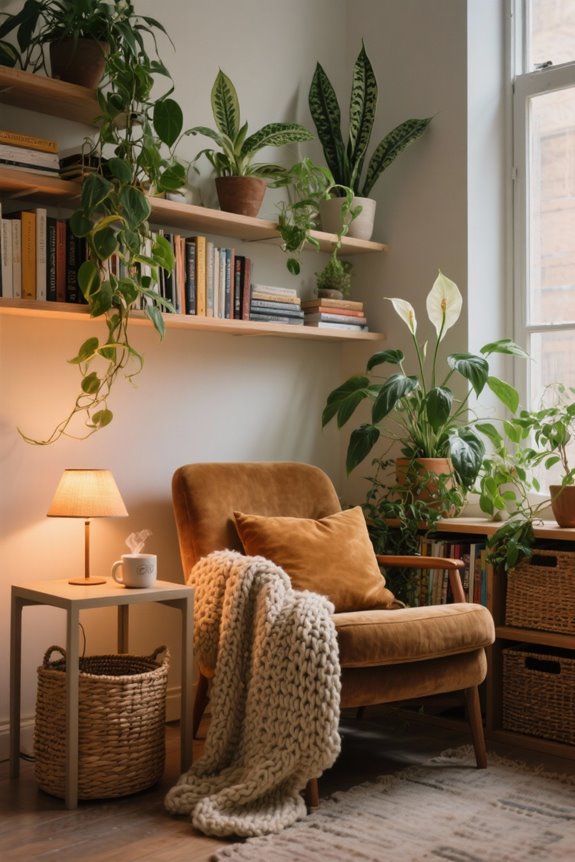
Indoor spaces can often feel bland and lifeless, especially those dim corners that struggle to get natural sunlight. Incorporating indoor plants like the resilient Snake plant and lovely Peace Lily can supercharge your low light areas! These green friends not only thrive in dim spaces but also seriously enhance air quality, filtering out nasty toxins while pumping out fresh oxygen. Feeling stressed? Studies prove that plants can elevate mood and reduce stress by up to 60%! Plus, their calming atmosphere makes reading in those cozy corners way more enjoyable. And let’s be honest—who doesn’t appreciate low-maintenance beauties that require minimal care? With indoor plants, you’re not just sprucing up a corner; you’re creating a vibrant oasis in your home! Additionally, integrating features like rounded corners and anti-tip devices in furniture can ensure safety and stability, complementing the tranquility of your plant-friendly reading nook.
Care Tips for Low-Light Houseplants
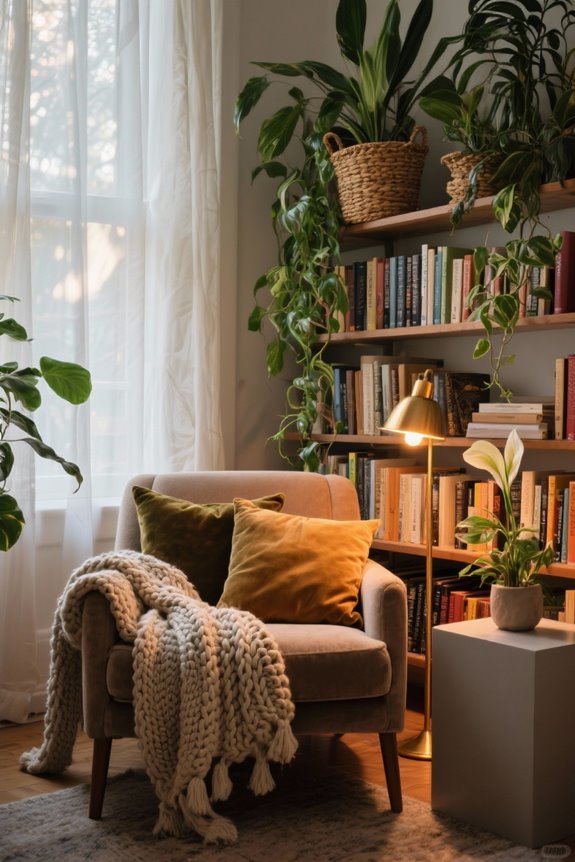
Caring for low-light houseplants can feel like traversing a botanical labyrinth, but with the right approach, anyone can turn those green companions into thriving little wonders! First off, remember: infrequent watering is key—let that soil dry completely! A well-draining soil mix is essential, especially for low-light champions like the ZZ Plant and Snake Plant. Don’t forget about humidity levels; many plants love a bit of misting—like the ferns, that thrive in moisture. Regularly dusting the vibrant green foliage helps enhance light absorption and keeps your plant pals looking fabulous! Plus, consider giving them a bright spot during seasonal changes to boost growth—who wouldn’t want that? Incorporating LED lighting features can also enhance the ambiance of your reading nook, creating a cozy environment for both you and your plants. So, monitor, care, and watch them flourish! Happy planting!
How to Arrange Plants for Optimal Growth

Arranging plants for ideal growth isn’t just about putting them where they fit; it’s a strategic endeavor! Consider low-light conditions for hardy companions like Snake Plants and ZZ Plants, tucking them into shadowy corners while placing Peace Lilies where they can soak up indirect light. To elevate shorter plants and jazz up your setup, use stands or hang pots—because who doesn’t love a layered look? Oh, and don’t forget to group plants by their watering needs; keep the thirsty ones together and avoid the awkward overwatering mishaps. Rotate plants occasionally to even out their sunbathing game, and think about incorporating reflective surfaces like mirrors to maximize light distribution. Maximum growth is just a well-thought-out arrangement away!
Choosing the Right Planter for Your Space

Choosing the right planter isn’t just a matter of aesthetics—it’s vital for healthy plant growth! In low-light areas, a planter with drainage holes is essential. Waterlogged roots? No thanks! Ceramic pots are winners, retaining moisture like champs for thirsty snake plants and ZZ plants. When picking a planter size, think about your plant’s growth—too big and you risk excess moisture, too small and it feels cramped, like a bad hotel room. Elevate with decorative stands for those cozy corners, maximizing every glimmer of ambient light! Plus, choose colors that pop against your home décor; the greenery absolutely shines against earthy neutrals. It’s not just a planter; it’s your plant’s stylish new home! Isn’t that exciting? When considering book storage solutions alongside your plant choices, materials include metal and wood laminated shelves provide both durability and aesthetic appeal in low-light corners.
Enhancing Ambiance With Houseplants
Imagine walking into a cozy reading nook where the atmosphere practically invites relaxation—or better yet, a world of adventure through pages! Houseplants like the Snake Plant and Peace Lily thrive beautifully in low-light conditions, radiating soft greenery and sophistication. Pothos, with its charming trailing vines, adds visual interest, making bookshelves come alive! And let’s not forget the Bird’s Nest Fern—its wavy leaves truly create an organic feel, perfect for curling up with a good book. Hardy companions like the Cast Iron Plant and Chinese Evergreen complement this vibrant scene while demanding minimal upkeep. Picture a nook bathed in calm, leafy vibes—where reading isn’t just an activity; it’s an immersive experience! Isn’t that just delightful? For those who value sustainable materials, incorporating wooden elements like cable management boxes can further enhance the ambiance with their elegant design and eco-friendly charm.
Frequently Asked Questions
What Plant Is Good for Dark Indoor Corners?
The snake plant offers resilience in low light, while pothos thrives with minimal care. The peace lily’s adaptability excels in darkness, complemented by ZZ plant growth, enhancing indoor humidity and air quality in decorative pots.
What House Plants Can Tolerate Low Light?
Low-light tolerant houseplants include the snake plant, pothos ivy, ZZ plant, peace lily, cast iron, and spider plant. Additionally, philodendron selloum, lucky bamboo, rubber plant, and various ferns thrive in such conditions.
What Is the Best House Plant for a Corner?
In the domain of houseplants, the ZZ Plant stands out as the best corner choice. Its unique texture and decorative foliage offer style, while being low maintenance, pet-friendly, and an ideal air-purifying option for small spaces.
What Plant Removes 78% of Airborne Mold?
The Peace Lily excels in mold removal, effectively eliminating about 78% of airborne fungal spores. Its air quality benefits enhance indoor environments, controlling moisture and reducing pollutants, consequently positively impacting health and humidity levels.


